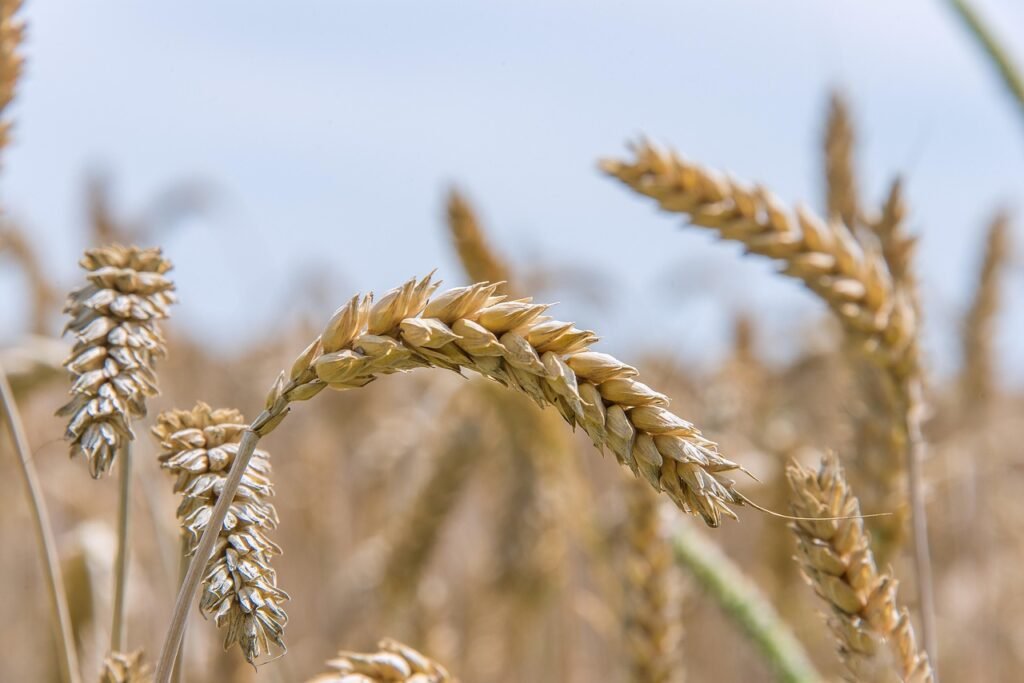
Enzymes play an important role in breaking down starch—a complex chain of glucose molecules—into simpler sugars. Starch can come from many sources such as corn, cassava, rice, and wheat. Liquid sugar or glucose syrup is then made by converting this starch into a concentrated sugar solution through enzymatic hydrolysis. Many industries, including Food & Beverages, Pharmaceuticals, Nutraceuticals, and Animal Feed, prefer liquid sugar because it is an efficient and energy-saving sweetening option.
Today, enzymes are the preferred method for starch hydrolysis because the process is cleaner, safer, and more efficient than the older acid-based method. Earlier, strong acids were required to break starch into sugars, but enzymes now perform this conversion smoothly and precisely.
The enzymatic starch-hydrolysis process mainly includes two stages:
Liquefaction
Saccharification
Ethanol is another product made from starch- or sugar-rich materials. It is typically produced by fermenting grains and then purifying the alcohol through distillation. Although industrial ethanol is often made from molasses and sugar residues, it can also be produced from grains depending on climate, availability, and industry needs.
Enzymes used in alcohol production help speed up and improve the fermentation of various raw materials such as maize, corn starch, wheat, millet, sweet sorghum, tapioca, and sugar beet.
Liquefaction step: (Applying high-temperature stable alpha-amylase)
The first step is the liquefaction process. A starch slurry containing 30–40% dry solids is heated so that the starch granules swell and gelatinize. After this, a heat-stable bacterial alpha-amylase enzyme is added to break the starch into smaller chains. This process produces maltodextrin, which mainly consists of various oligosaccharides and dextrins. Maltodextrins have very little sweetness, so they usually undergo additional enzymatic processing in the next stage.
Products
Heat-Stable Alpha-Amylas
In most starch-processing plants, liquefaction is carried out using a jet-cooking system. After adjusting the pH, a heat-stable alpha-amylase enzyme is added to the starch slurry. The slurry is then pumped into the jet cooker, where live steam is injected to quickly raise the temperature to around 105°C. It then moves through a series of holding tubes for 5–7 minutes, allowing the starch to fully gelatinize.
After this step, the temperature of the partially liquefied starch is lowered to 90–100°C through flashing. At this temperature, the enzyme continues to work for another 1–2 hours, breaking the starch further until the desired DE (Dextrose Equivalent) level is achieved.
Saccharification step (Applying glucoamylase)
The saccharification process is one of the most important steps in producing maltose syrup. After liquefaction, the mixture contains mainly dextrins and oligosaccharides, with only a small amount of glucose. To obtain high-purity maltose, these dextrins must be further broken down using saccharifying enzymes.
During saccharification, the glucoamylase enzyme acts on the liquefied starch and breaks the glycosidic bonds, converting dextrins into simple sugars. The key role of the saccharifying enzyme is to cut the oligosaccharides and limit dextrins as efficiently as possible, so that the final product contains a high concentration of maltose.
The overall process can be summarized as:
- Starch Input (Corn / Wheat)
- Gelatinization – Starch is heated in water to form a thick, viscous gel.
- Liquefaction – Alpha-amylase breaks the gel into shorter dextrin chains.
- Saccharification – Glucoamylase converts dextrins into glucose or maltose by breaking glycosidic bonds.
- Final Product – High-purity glucose or maltose syrup.
Products
Glucoamylase
During the saccharification stage, the temperature is carefully maintained between 58–60°C and the pH is kept within 5.8–6.0. These conditions ensure that the saccharification enzymes work at their highest efficiency. Under these conditions, the enzymes break the α-1,4 glycosidic bonds step by step, cutting maltose units from either the non-reducing end or the reducing end of the starch molecule.
In real industrial production, additional debranching enzymes are often used because starch contains a large amount of amylopectin, which has branch points. Enzymes such as pullulanase and isoamylase break the α-1,6 glycosidic linkages at these branch points. This helps convert the branched portions of amylopectin into simpler oligosaccharides, which the main saccharifying enzyme can then easily convert into maltose.
By working together, the saccharification enzymes continuously cleave both α-1,4 and α-1,6 bonds. As a result, a large amount of maltose is produced, leading to the formation of high-quality maltose syrup.
Using Glucoamylase Enzyme
- After liquefaction, the dextrin-rich solution is cooled to a temperature suitable for glucoamylase activity.
- Glucoamylase is then added to break down dextrins into glucose.
- This reaction usually takes place at a moderate temperature of 55–65°C and a pH of 3.5–5, over several hours.