Viscosity-lowering enzymes
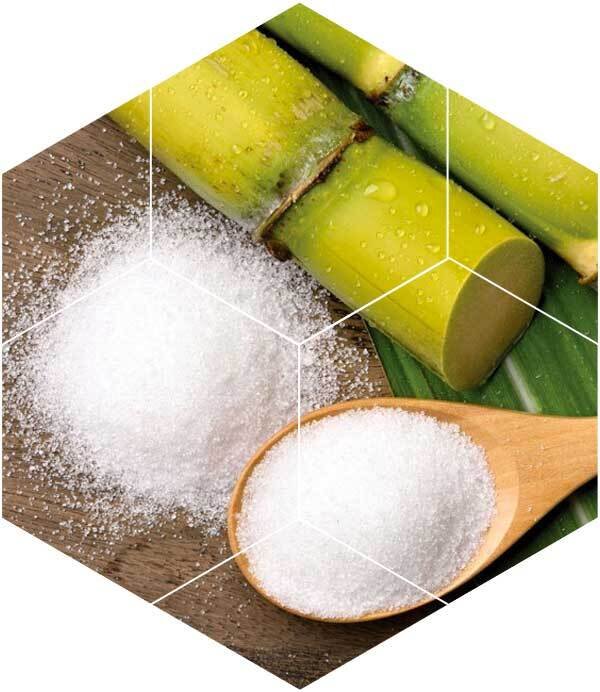
Sugar-processing enzymes speed up the breakdown of starch into glucose. This transformation happens in two main stages: liquefaction and saccharification. The sugarcane plant contains several polysaccharides. Cellulose and hemicellulose, which are found in the cell wall, provide structural strength to the cane. Since they are not soluble in water, they do not interfere with sugar production.
Starch, which supports the plant’s metabolic functions, is mainly present in sugarcane as insoluble granules. During processing, these granules may dissolve and influence the sugar manufacturing process. Other water-soluble polysaccharides such as natural sugarcane polysaccharides, glucan, and dextran are also found in the plant.
Sugar enzymes break down starch into maltodextrin, which is mostly made up of oligosaccharides and dextrins. In the next stage, known as saccharification, maltodextrins are further converted with the help of glucoamylase enzymes. These enzymes can completely hydrolyze starch into glucose, producing small amounts of maltose and isomaltose as by-products.
Benefits
Enzyme for Viscosity Reduction (Heat-Stable Alpha-Amylase)
Heat-stable alpha-amylase is a specially formulated enzyme designed to act on starch molecules and improve overall processing efficiency and sugar recovery. When starch and dextrins are present in the juice, they increase viscosity, reduce clarification, and cause crystal elongation. These issues lead to lower sugar yield and reduced product quality. Using alpha-amylase helps break down these starch components, resulting in smoother and more efficient sugar processing.
Benefits
- Breaks down polysaccharides and oligosaccharides such as starch and dextrin.
- Reduces the viscosity of syrup.
- Improves the boiling rate.
- Enhances purging efficiency during centrifugation.
- Improves sugar quality.
- Reduces boiling house losses and overall processing losses.
- Increases liquor clarity and improves filterability.
ENZYME FOR DEXTRAN HYDROLYZER
Dextranase is an enzyme obtained through the controlled fermentation of a Non-GMO fungal strain. It breaks the alpha (1,6) glucosidic bonds found in dextran, producing either glucose or isomaltose when acting as an exodextranase, or generating isomalto-oligosaccharides when functioning as an endodextranase.
In sugar manufacturing, dextrans are unwanted polysaccharides formed when contaminating microorganisms convert sucrose into viscous compounds. Their presence increases juice viscosity, disrupts processing flow, reduces sugar recovery efficiency, and leads to substantial production losses. Applying dextranase is considered the most effective method for breaking down dextrans in sugar mills.
Certain bacteria, filamentous fungi, and a few yeast species naturally produce dextranase. Among them, fungal dextranases show the fastest activity under low Brix conditions, with an optimal pH around 5.0 and temperature near 50 °C—parameters commonly found during juice extraction. Enzyme formulations containing these dextranases have been successfully used to degrade dextrans in sugarcane juice at the mill.
In later processing stages, where dextrans have already caused damage, both temperature and Brix values become high. Even though these stages involve smaller volumes of syrup, enzyme treatment still proves useful, although higher dosages of dextranase are required, resulting in increased enzyme consumption.
Benefits
- Breaks down polysaccharides and oligosaccharides such as starch and dextrin.
- Minimizes crystal growth length.
- Lowers syrup thickness and flow resistance.
- Enhances the boiling efficiency.
- Improves separation and purging performance during centrifugation.
- Enhances overall sugar quality.
- Reduces boiling house losses and decreases total processing loss.